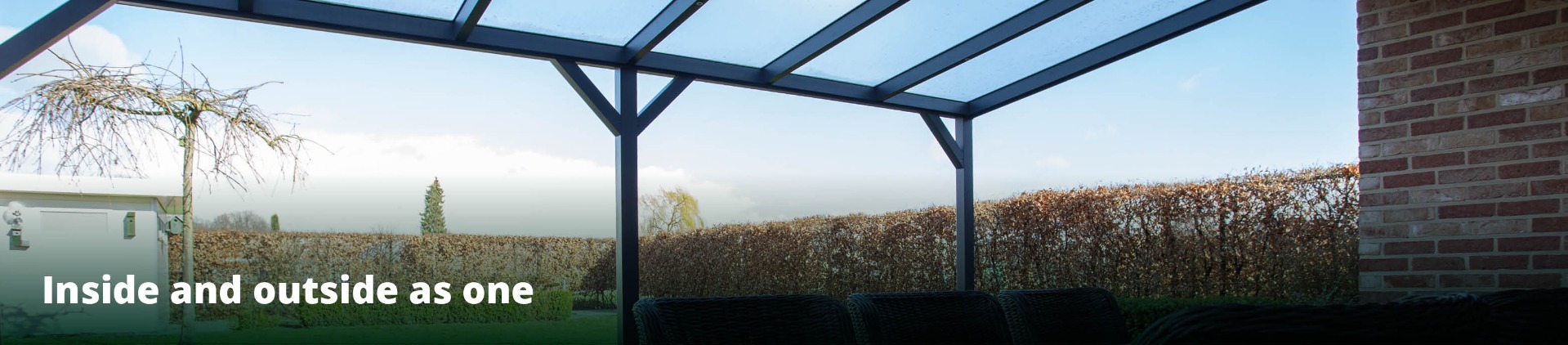


Your garden can be enjoyed year-round. The temperature often determines how long you truly enjoy it, and the same goes for your veranda. When it's too cold, you’d rather head indoors. But the right warmth lowers that threshold. Fortunately, there are several solutions for heating a covered area, including an outdoor space heater. But what is the best position for a heater under your veranda? In this article, we explain why distance is important, how infrared heat works in every season, and how to smartly use an outdoor space heater when heating a garden room or heating a conservatory in winter. This way, you get the most out of your outdoor space all year round.

Different ways to heat your garden room
Before you determine the ideal spot, it helps to know that the type of heater affects where to place it. There are various ways of heating a garden room in winter. While traditional heaters often warm the air, modern outdoor space heaters use infrared radiation. In this article, we focus on the optimal placement of infrared heaters, as this is the most efficient way to create instant comfort in a specific area under your patio roof.
How does infrared heat work?
Infrared heat works differently than traditional heating. Instead of heating the air, infrared heat targets you and the objects around you directly. Think of sun rays on a crisp winter day: the air feels cold, but the warmth on your skin is immediate.
Under a patio roof, this is a big advantage. Warm air can escape, especially through open sides. Infrared heat remains noticeable, even with a light breeze. Your body, the table and the floor absorb the heat and slowly release it again. This way, you feel comfortable within seconds.

The 2-metre rule: heat your patio strategically
A warm veranda starts with the right placement of the heater under the roof. The ideal position depends on the distance from your favourite seating spot. Whether you choose a fixed heater or a portable model, the distance to your lounge or dining area determines how much warmth you actually feel.
- Distance: take into account an effective radiant range of about 2 to 5 metres. For the highest efficiency, place the heater diagonally beside or behind your seating area.
- Shelter: is one side of your patio open? Place the heater on the "closed" side of your seating space so the wind doesn't immediately disrupt the warmth.

3 practical tips for heating a conservatory in winter
Want to smartly start heating a conservatory in winter? With these tips, you’ll create the ideal 'warm cocoon':
- Close the glass sliding doors: use glass sliding doors to keep wind and cold outside so warmth can linger inside.
- Add draught strips: these help minimise draughts under the veranda and ensure a neat finish of the glass sliding doors.
- Keep it close: place the heater directly next to your seating area so the warmth reaches you without obstruction.
- Make it cosy: combine the heater's warmth with soft throws and cushions. This makes your terrace comfortable and atmospheric, even on cold days.
Comfortable outdoor living with the Gumax® standing patio heater
The Gumax® standing patio heater is a stylish addition to your veranda and ensures that you can enjoy sitting outside even on colder days or evenings. Place this electric outdoor space heater near your seating area so the warmth reaches you directly. This way, you benefit fully from its features:
- Warmth within seconds: powerful halogen lamps with strong infrared radiation heat people and objects directly.
- Ideal for the patio roof: with a heating capacity of around 10-21m², the heater is ideal for heating a garden room, heating a conservatory in winter or warming your veranda.
- Atmospheric design: the head design adds extra ambiance while the power cables are neatly routed through the pole for a clean finish.
- Easy to assemble and operate: quickly assemble the heater yourself with the step-by-step manual and operate it effortlessly using the clear on/off switch.
Outdoor living doesn't stop after one season. With a well-placed outdoor space heater and a layout that adapts to the seasons, your patio remains a space you'll love spending time in, whether it’s a cool summer evening or a wintry morning.